
If you own a private aircraft, you’ve probably heard the terms Part 91 and Part 135 thrown around. But knowing the difference between them matters a lot more than most people realize. The distinction between Part 91 and Part 135 affects far more than paperwork. It determines how your aircraft can be operated, the maintenance and training standards it must meet, and whether you can legally generate revenue by carrying passengers for hire. Choosing the right operating structure can have a significant impact on your aircraft’s flexibility, operating costs, and overall value. At Lane Aviation, we manage aircraft operating under Part 91 and serve as a trusted charter broker for Part 135 operations.
What Is Part 91?
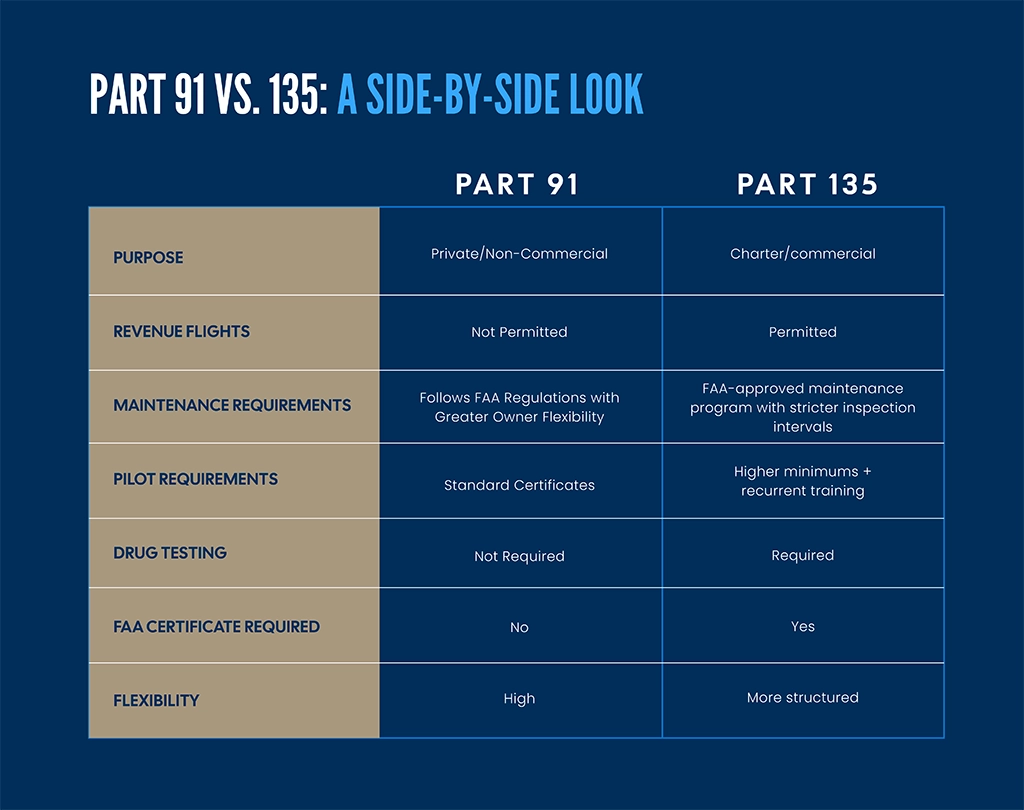
Part 91 covers the FAA’s general operating and flight rules for non-commercial aviation. If you’re flying your own aircraft for personal or business use—and you’re not charging passengers—you’re operating under Part 91.
Key characteristics of Part 91 operations:
- The aircraft owner is responsible for maintenance and airworthiness
- More flexibility in scheduling, crew requirements, and operational decisions
- No FAA air carrier certificate required
- Cannot charge passengers for flights (outside of very limited cost-sharing arrangements)
- Maintenance requirements are less restrictive than those required for commercial charter operations under Part 135
Part 91 is the most common framework for private aircraft owners who fly on their own schedule for their own purposes. It’s straightforward, and it gives you a lot of control over how you operate.
What Is Part 135?
Part 91 vs 135 comes down to one key distinction: commercial intent. Part 135 governs on-demand air carrier operations. These are charter flights where passengers are paying to be on your aircraft. If you want to put your plane to work and generate revenue, Part 135 is what applies.
Key characteristics of Part 135 operations:
- Aircraft must meet more rigorous maintenance and inspection requirements
- Pilots must meet higher minimum flight hour and training standards
- Operations require an FAA-approved operations manual
- Random drug and alcohol testing is required for flight crew
- The operator must hold an FAA Air Carrier Certificate
A Note on Tax Considerations
Aircraft used primarily for business purposes may qualify for various tax benefits under current IRS rules, including depreciation and deductions for qualifying operating expenses. Operating under Part 135 does not automatically create those benefits, but charter operations may help support the aircraft’s business use percentage when properly structured. These decisions should always be made in consultation with an aviation CPA and tax advisor who understands how your specific usage patterns affect what you’re eligible for.
Part 135 holds commercial charter operations to a higher standard, which makes sense given that you’re carrying paying passengers. It’s more structured, but it opens the door to revenue opportunities that Part 91 simply doesn’t allow.
Part 91 vs. 135: A Side-by-Side Look
Which One Is Right for You?
The answer really comes down to how you plan to use your aircraft and what your goals are as an owner.
Part 91 aircraft operations make sense if:
- You fly primarily for personal or business travel
- You have no interest in generating revenue from your aircraft
- You want maximum flexibility in how and when you fly
- You want to keep operational overhead manageable
Consider Part 135 if:
- You want to offset ownership costs by placing your aircraft on a charter certificate
- You’re open to your aircraft being used for charter flights when you’re not flying it
- You want a management company to handle all the operational details
- You’re comfortable with the additional maintenance and crew requirements
A lot of aircraft owners we work with go with a hybrid approach—operating under Part 91 for their own flights while placing their aircraft on a Part 135 charter certificate to generate revenue when the plane would otherwise be sitting in the hangar. It’s a smart way to offset the cost of ownership without giving up control of your aircraft.
What Happens if You Get It Wrong?
Operating a flight under Part 135 rules without the proper certification—or charging passengers on a Part 91 aircraft—can result in serious FAA enforcement action, including civil penalties and certificate suspension. It’s not an area where you want to be guessing.
If you’re ever unsure which rules apply to a specific flight or situation, the safest move is to consult with a qualified aviation professional or your aircraft management team before the flight, not after.
Have Questions About Part 135 vs. Part 91?
Understanding Part 135 vs Part 91 isn’t just about compliance. It’s about making smart decisions for your aircraft and your operation. Part 91 gives you freedom and simplicity. Part 135 gives you the ability to generate income from your asset, but with more regulatory responsibility attached.
Neither is inherently better. The right answer depends on your situation. If you have questions about which framework fits your aircraft and your goals, the team at Lane Aviation is happy to help you think it through. Contact us, and we’ll be happy to assist you!